
If you are reading this, it likely means you want solar panels for home use that actually fit your life in Nigeria. You want power you can plan around, not confusing talk, not “one-size-fits-all,” and not promises that break your trust later. This guide is built from the attached SolarReviews beginner guide, but rewritten for Nigeria, and supported with Nigeria-relevant facts, policies, and data.
Solar panels for home: what they really do
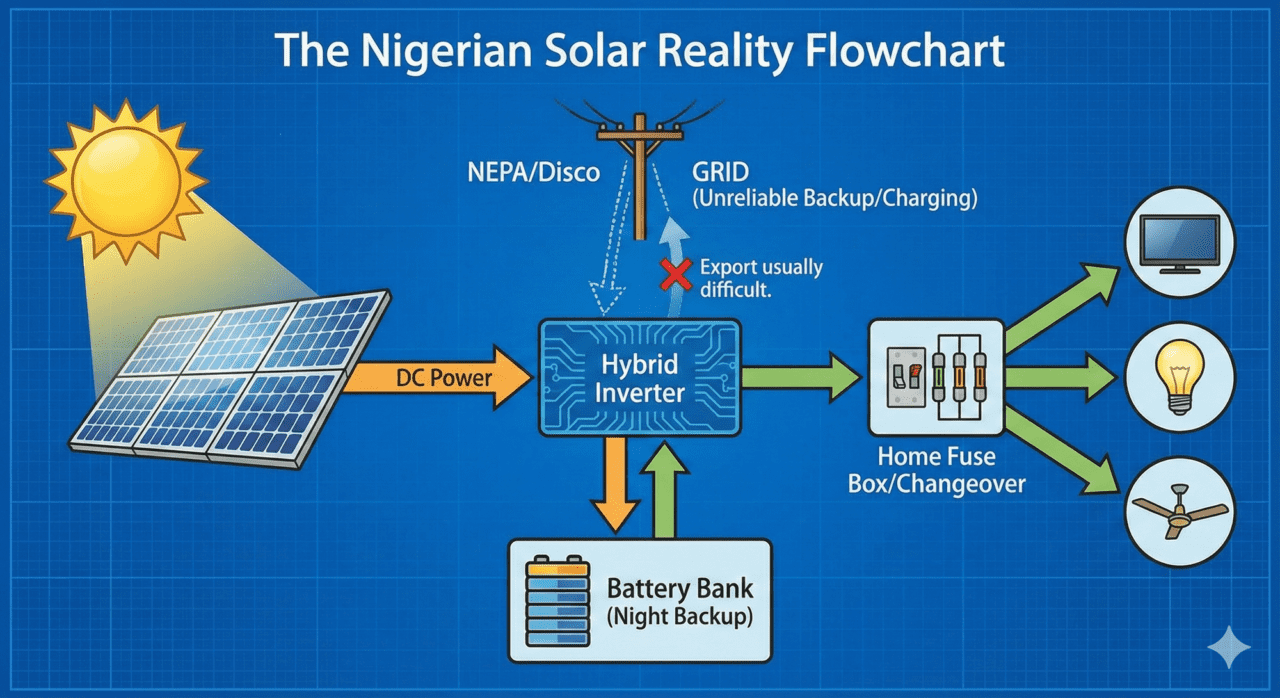
Solar panels produce electricity through the photovoltaic effect. Most home solar panels are made with silicon. When sunlight hits the panel, electrons move and create an electric current. That power is DC electricity, and your household appliances use AC electricity, so a solar inverter converts the DC from your panels into AC you can use at home.
Solar can also produce more energy than you need at a moment. When that happens, the extra energy can either be stored in a battery system for later use or exported to a grid where that option exists and is properly set up.
The 3 home solar system types in Nigeria
Solar systems are commonly grouped into grid-tied, hybrid, and off-grid systems.
Your choice should depend on one key question: Do you need stored power at night and during low-sun periods, or are you only trying to reduce daytime dependence?
1) Grid-tied solar system
A grid-tied system is connected to the grid and typically does not include battery backup. In the SolarReviews guide, it explains grid-tied systems as commonly using net metering and exporting power to the utility grid.
In Nigeria, grid conditions and metering arrangements vary widely, so you should not assume “exporting” will work for you unless your installer can explain, in writing, how your metering and connection will be handled.
2) Hybrid solar system (most common “home comfort” direction)
A hybrid system combines solar panels + inverter + battery storage, and can also interact with the grid where needed. This is the practical choice when you want your solar to work beyond daytime, because batteries store excess solar energy for later use.
3) Off-grid solar system
Off-grid means your home runs without relying on the grid. It requires careful sizing and stronger battery planning because your system must carry you through nights and low-sun days. It can work very well, but only when the system is designed around your real loads and lifestyle, not “guesswork sizing.”
What equipment you must see in a serious quote
A solar setup is not just panels. The attached guide lists the main components that work together to power a home: panels, racking, inverter, a meter, and for hybrid/off-grid systems, battery storage and a charge controller to prevent battery overcharge.
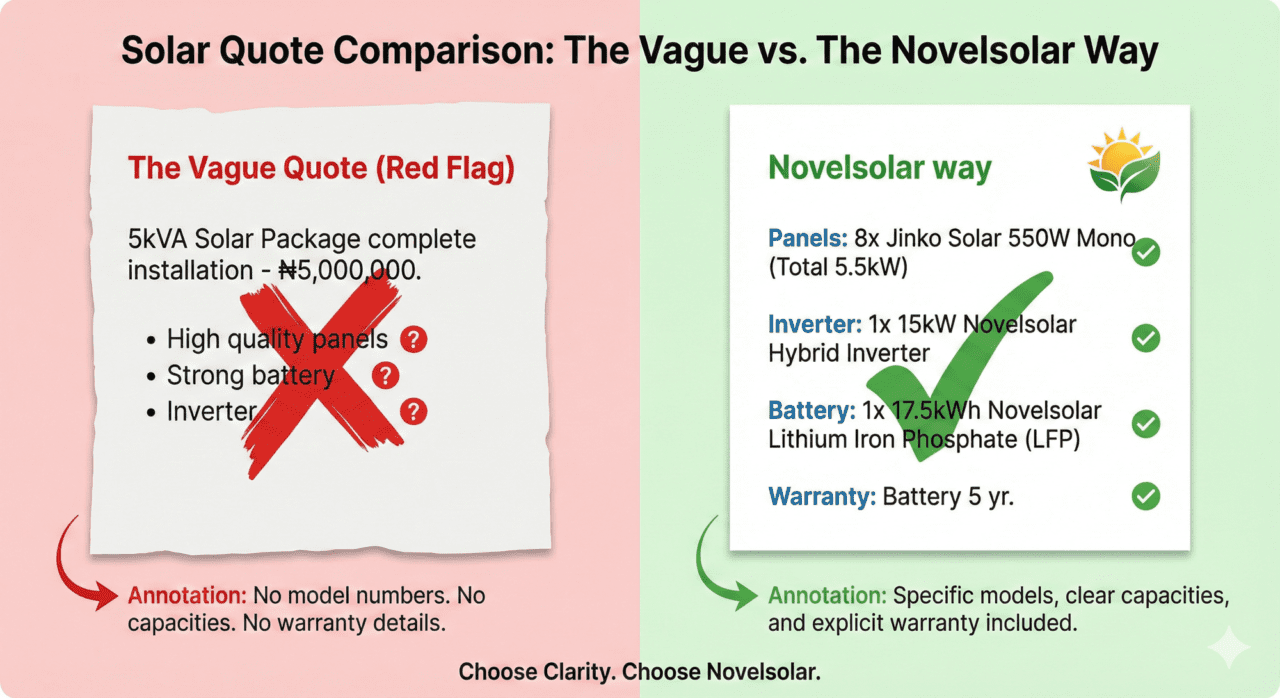
When you are reviewing any installer quote in Nigeria, make sure you see these items clearly stated (with brand/model, not vague names):
- Solar panels (wattage, quantity)
- Mounting/racking (roof or ground mounting details)
- Solar inverter (capacity, type, protections)
- Battery storage if hybrid/off-grid (capacity in kWh, chemistry type)
- Charge controller where required (battery protection)
If any quote avoids these details, that is not “simplicity.” That is a risk.
Solar panel types Nigerians usually see (and what matters most)
The attached guide states that most residential home solar installations today use monocrystalline solar panels, while polycrystalline and thin-film panels are rarely used for residential projects.
For you, the most important thing is not the label alone. What matters is that you get panels with clear product and performance warranty, proper installation, and protection against common issues like poor wiring, bad mounting, weak earthing, and low-quality connectors.
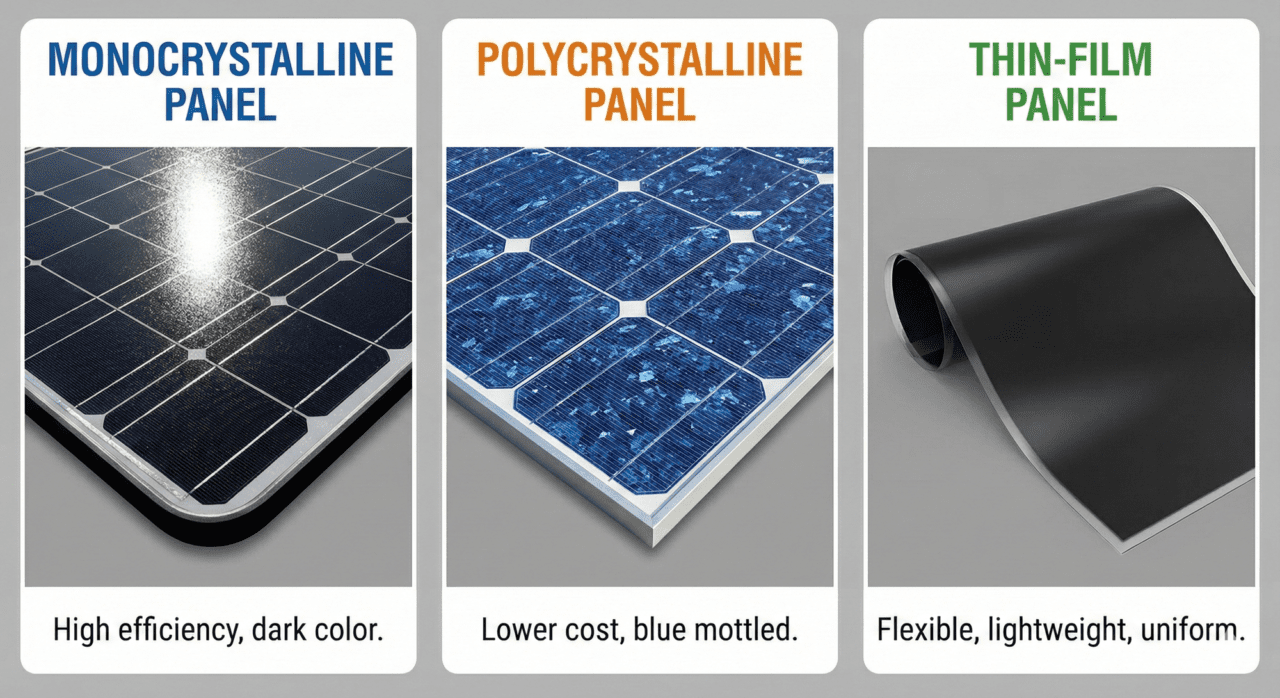
Monocrystalline leads with the highest efficiency (20%+) and power per square foot; Polycrystalline trails slightly (15-17%) requiring more space for the same output; Thin-Film generally has the lowest efficiency (11-15%) but maintains better performance in high heat or partial shade.
Solar energy in Nigeria: do we have enough sun for solar panels?
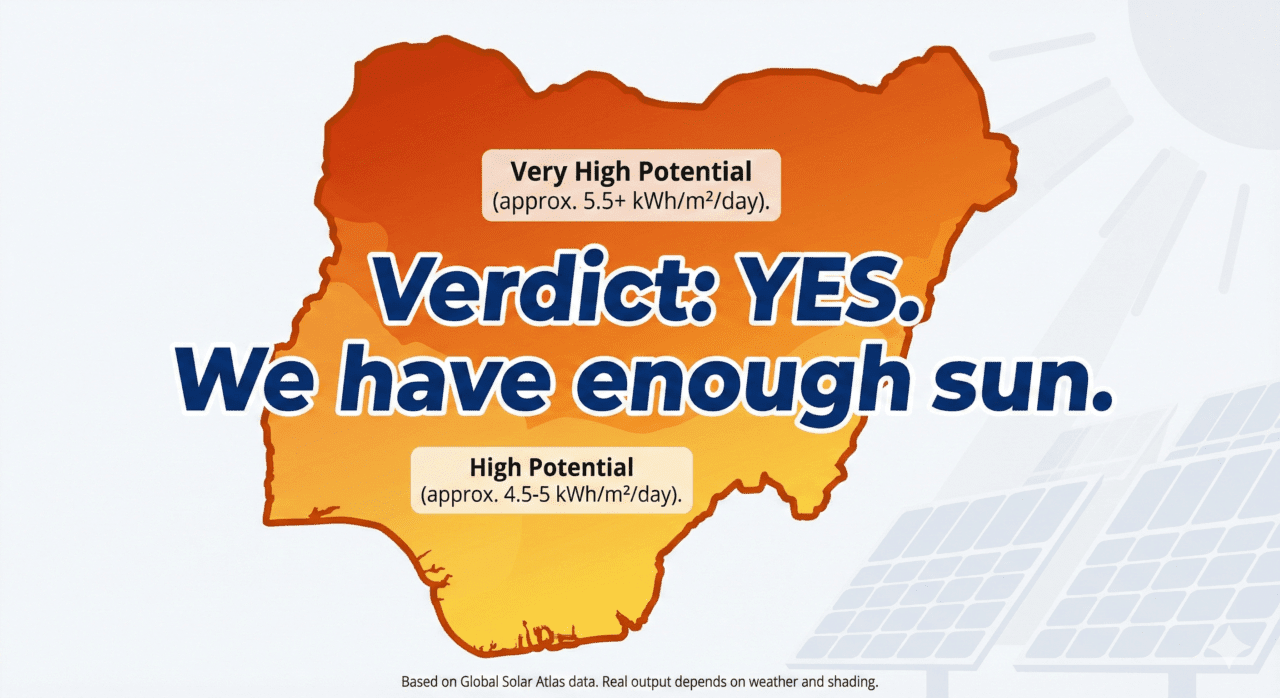
Yes, Nigeria has strong solar potential. The Global Solar Atlas (provided by the World Bank Group as a free solar resource tool) shows high solar irradiation levels across Nigeria, with many locations around roughly ~2000 kWh/m²/year of global horizontal irradiation (GHI), depending on region. This supports why solar can work well across cities, towns, and many campus environments when the system is properly sized.
Local research sources also report daily solar radiation values around the 5 kWh/m²/day range on clear days in measured contexts, which aligns with the idea that Nigeria receives strong sunlight suitable for solar generation.
What you should expect in real life is this: solar output is highest in bright sun, lower in cloudy weather, and affected by shading, roof angle, dust, and heat. Solar works well here, but it still follows physics and weather.
Solar system sizing in Nigeria (the simple way to think about it)
The SolarReviews guide gives a sizing formula you can use to estimate how many panels you need using your energy usage, peak sun hours, and the panel output.
A simple way you can apply this in Nigeria
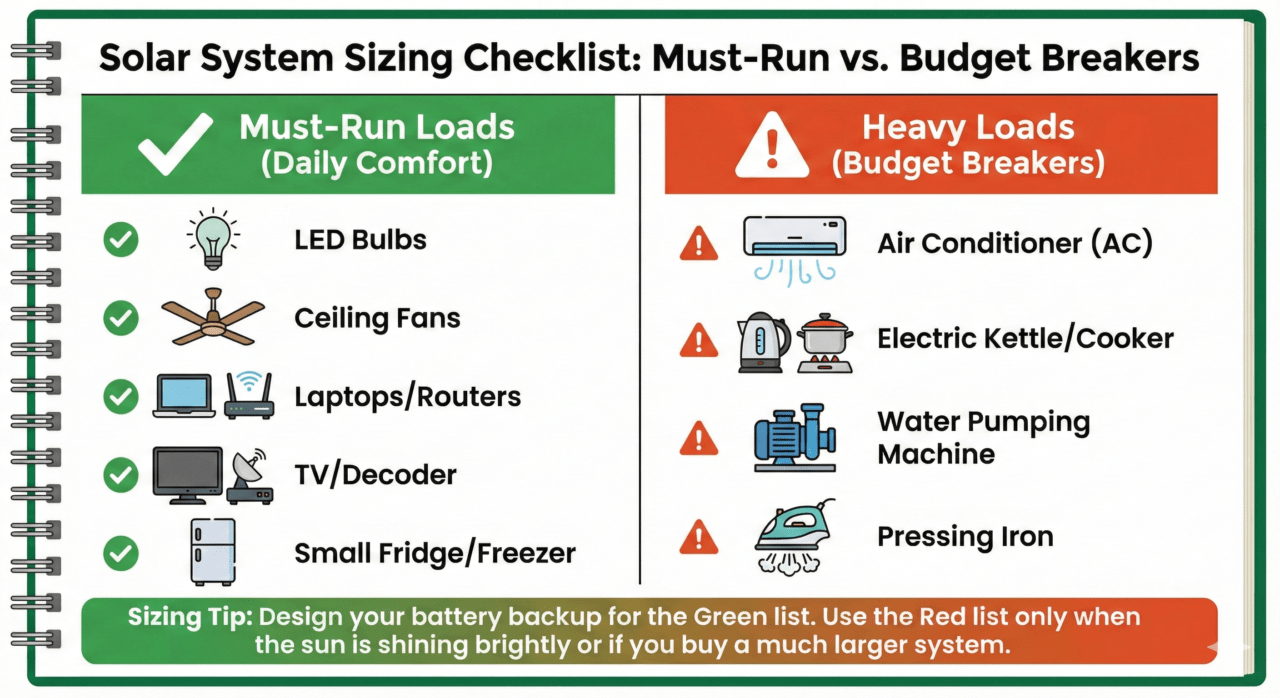
Start from your own lifestyle, not from someone else’s system size. Make two lists:
- Your “must-run” loads (things you want daily without stress): lights, fans, Wi-Fi, phone/laptop charging, TV, fridge, etc.
- Your “heavy loads” (things that change the budget fast): pumping, electric cooking appliances, multiple fridges/freezers, AC, pressing irons, etc.
Then ask your installer to size your system around energy per day (kWh) and how many hours of backup you want from batteries. If an installer only talks about “number of panels” without discussing your daily energy and backup goals, you are not getting a real design.
Solar battery storage: what to expect and what not to expect
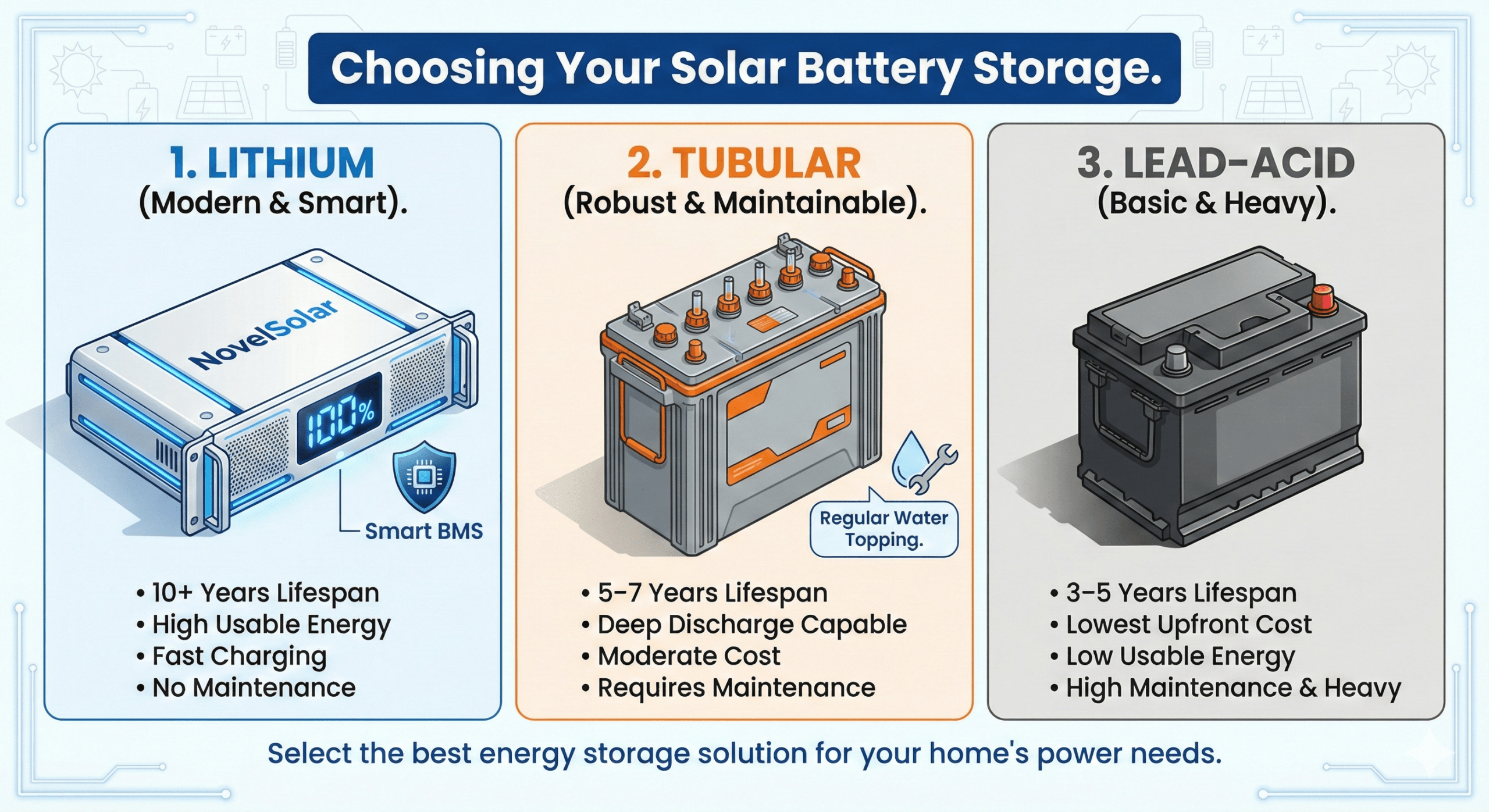
Battery storage is what turns solar into something you can rely on at night. The attached guide describes battery storage as a way to store excess solar energy production for later use, and notes batteries are used in hybrid and off-grid systems.
Here is the honest part: battery backup time depends on your battery size (kWh) and your total running load (watts) at that time. If your night load is small (lights, fans, charging), batteries last much longer. If your night load is heavy (freezers + pumping + AC), batteries drain fast unless the bank is large.
Solar panel cost Nigeria: what verified local sources say (and how to use it safely)
Nigeria prices move due to exchange rates, import costs, and component quality. That is why you should treat any online price as a range, not a promise, and always confirm with current quotes.
That said, Nigerian solar industry sources commonly publish market ranges. For example, Solarlify’s Nigeria market estimates (late 2025) provide typical price ranges by system size (kW) for residential solar setups. Another Nigeria-based solar education source also gives a broad estimate that typical residential systems can range into the millions of naira depending on size and component quality.
How to use this properly (so you don’t get misled): use published ranges only as a starting point, then compare 3+ quotes with the same checklist: panel wattage and count, inverter capacity, battery kWh, protections, wiring quality, and warranty. Even the SolarReviews guide recommends comparing quotes carefully across system details and warranties; that approach matters even more in Nigeria.
Nigeria reality check: why more people are moving to solar now
Nigeria’s energy access challenges are still significant. World Bank data shows Nigeria’s electricity access was about 61.2% in 2023, meaning tens of millions of people still lack reliable access. At the same time, Nigeria’s regulators and institutions are actively working around mini-grids and distributed energy. NERC’s Mini-Grid Regulations (2023) are part of the framework guiding mini-grid development. The Rural Electrification Agency (REA) also runs programs aimed at scaling solar home systems and access for households and MSMEs.
Even in mainstream news, Nigeria continues to attract financing and partnerships around renewable mini-grids to expand access.
This matters to you because it signals one thing: solar adoption is not a fantasy trend; it is a growing practical solution, and it is being supported by policy and programs, even though household pricing still depends on your local installer and component quality.
What you should check before you pay any installer
Ask for these numbers in writing
- Total system size (kW) and what it is designed to power
- Battery size (kWh) and expected backup hours for your listed appliances
- Inverter capacity and whether it can handle starting surges (especially for fridges, pumps, and AC)
- Protection devices (breakers, surge protection, isolators) and proper earthing
- Warranties (panel warranty, inverter warranty, battery warranty, and workmanship warranty)
Watch out for these common traps
- A quote that lists “inverter + battery + panels” with no models and no capacity numbers
- A promise that a small system will carry heavy loads without explaining battery size and load limits
- A design that ignores your roof shade, roof strength, cable distance, and safety protections
Practical next steps (what you can do today)
If you want solar panels for home use and you want to avoid regret, do these three steps in this exact order:
- Write your appliance list and how many hours you use each per day (even rough numbers help).
- Decide your priority: “daytime savings” or “night backup comfort,” because that changes battery planning completely.
- Collect at least three quotes and compare them using the checklist above, not by price alone.
Calm close: what this means for you
You don’t need to be an engineer to make a smart solar decision in Nigeria. You only need clear numbers, honest limits, and a system designed around your real home life. Solar works here because we have strong sunlight, but the result you get depends on sizing, component quality, installation safety, and how well the system matches your daily habits.
If you want, send me your appliance list (even in plain text like “2 fans, 1 fridge, TV, lights, laptop”), and I will turn it into a simple solar sizing guide (recommended inverter range + battery kWh range + panel kW range) without guessing or overpromising.
2 Comments
This is a beautiful read
This is good to learn, great