CategoriesBlog General topic Products

Itel Solar Power Tank (1kWh) – Price, Features & Full Review in Nigeria (2026 Guide)

In a world where staying connected is essential, access to reliable power can make all the
difference. Whether you’re traveling, studying, working remotely, or living in an area with
unstable electricity, a dependable portable power solution is no longer a luxury it’s a necessity.
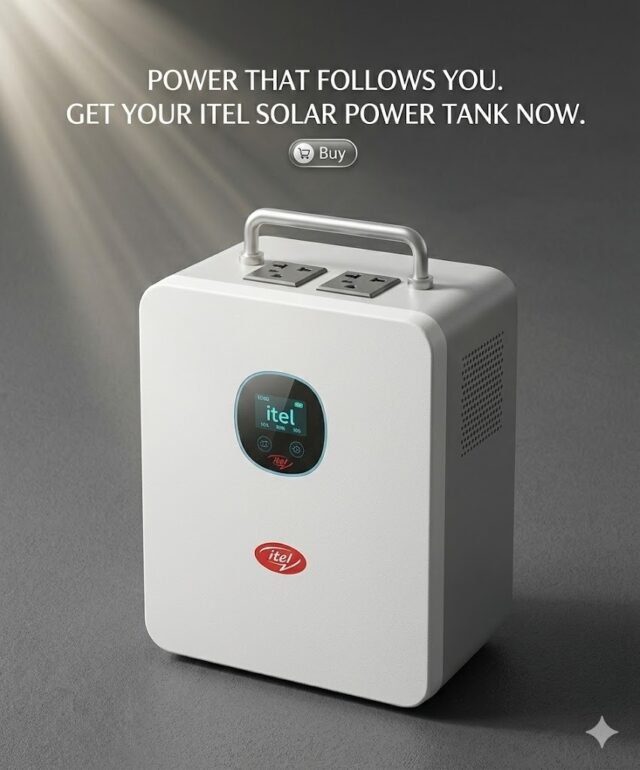
The Itel Solar Power Tank is designed to meet that need, combining portability,
sustainability, and efficiency in one powerful device. Let’s explore why this innovative solar
is becoming a must-have eco-friendly power solution.
Understanding the Itel Solar Power Tank: Features and Benefits


When it comes to portable solar generator, not all devices are created equal. The Itel Solar
Power Tank stands out thanks to its thoughtful design and user-focused features.

  • High Battery Capacity
    One of the biggest highlights is its large battery capacity- 1kWh (1000 Wh) lithium battery,
    allowing users to charge multiple devices multiple times. Smartphones, tablets, wireless
    earbuds, and even small gadgets can all be powered with ease.
  • Sustainable Charging
    Featuring dual charging capability, this device can be powered either by sunlight using up to
    ~400-450W of solar panels via an MPPT controller or by conventional electricity. This
    versatile charging flexibility makes it perfect for outdoor use while ensuring reliable power
    whenever grid electricity is available.
  • Dual AC Output Options
    The Solar Power Tank features two AC output ports, allowing it to be connected to extension
    cables for powering multiple devices at once. This makes it suitable for charging phones, small
    household electronics, and other essential gadgets. It can also be connected to a power source
    ensuring reliable energy access whether you’re at home or outdoors.
  • Eco-Friendly Power Solution
    By utilizing renewable solar energy, it supports sustainable living and reduces carbon footprint.
    It’s a small step toward cleaner energy consumption with a big impact.

Use Cases: Who Needs an Itel Solar Power Tank?

This device isn’t limited to one type of user. It serves a wide range of needs.

  • Travelers and Campers
    Outdoor enthusiasts can keep phones, GPS devices, and cameras powered during camping trips
    and road adventures.
  • Students
    Students commuting long hours or studying in areas with unreliable electricity can depend on
    it as a portable charger throughout the day.
  • Residents in Areas with Unstable Power
    In regions where electricity supply is inconsistent, this device acts as a reliable backup source.
  • Emergency Kits
    It’s a smart addition to emergency preparedness kits for households.
  • Business Owners and Shop Operators
    Small business owners and shop operators can keep essential devices running during power
    outages. From charging phones to powering small electronics, it helps prevent business
    interruptions and ensures smoother daily operations.
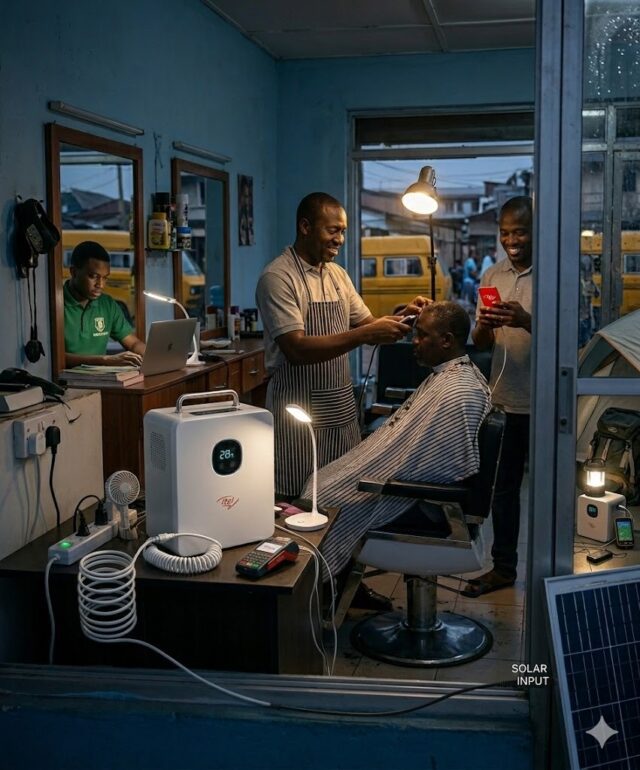
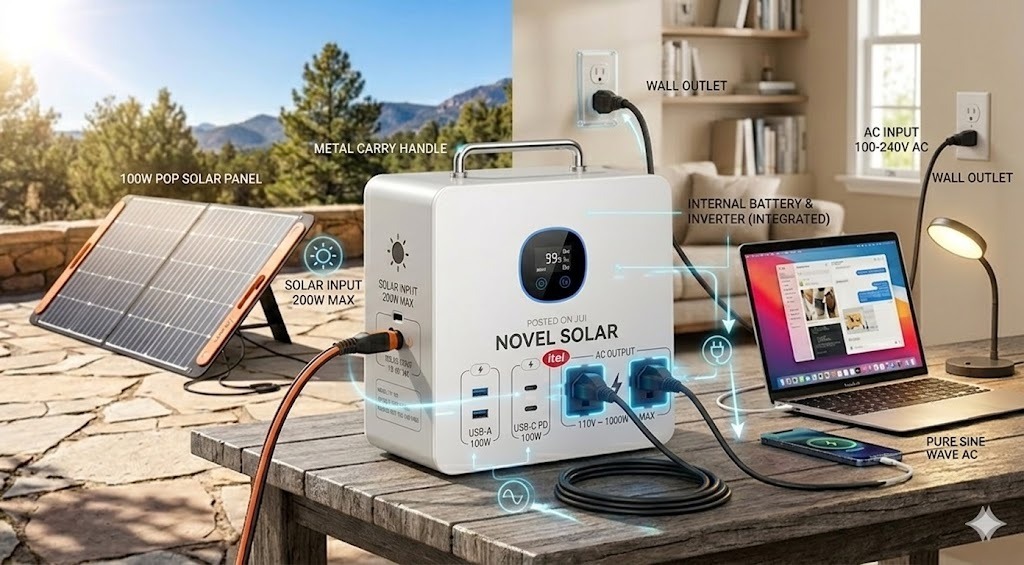
Itel Solar Power Tank features high battery capacity and multiple USB outputs

How Does the Itel Solar Power Tank Work? Technology Explained


The Itel Solar Power Tank is a portable power station with a built-in rechargeable battery and
inverter system. It stores electrical energy and allows you to power devices through its AC
output sockets whenever needed.


Dual Charging Capability
The unit supports two charging methods:
• Solar charging – by connecting compatible external solar panels
• AC charging – by plugging it into a regular wall outlet
You can use either method depending on availability, making it flexible for both home and off
grid use.
Reliable Power on Demand
Once fully charged, the stored energy can be used anytime through its dual AC outputs,
allowing you to connect extension cables and power essential devices.
In simple terms, the Itel Solar Power Tank stores power when electricity is available.
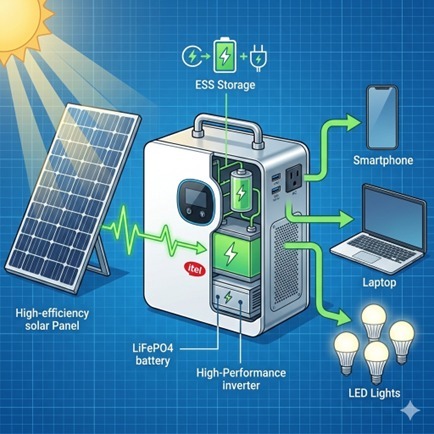
How the Itel Solar Power Tank Works

Itel Solar Power Tank Specifications & Power Capability


Below are the key technical specifications of the Itel Solar Power Tank (1kWh) and examples
of devices it can realistically power:
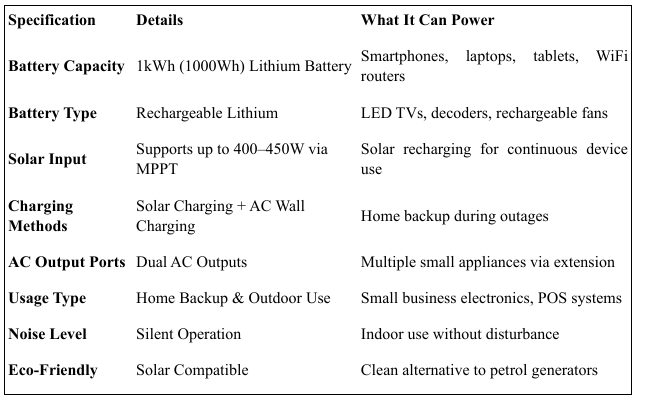
The Advantages of Choosing the Itel Solar Power Tank Over Traditional Chargers


Why choose a solar power generator over conventional chargers?

  1. Solar vs Conventional Chargers
    Traditional chargers require constant access to electricity. The Solar Power Tank, however,
    offers both solar and wired charging, giving users greater flexibility.
  2. Emergency Power Backup
    During power outages, storms, or natural disasters, having an emergency power backup can be
    crucial. This device ensures your essential gadgets remain functional when you need them
    most.
  3. Off-Grid Charging Solution
    Camping in remote areas? Traveling off-grid? The Solar Power Tank provides reliable charging
    without needing wall outlets.
  4. Renewable Energy Device
    Choosing solar means choosing sustainability. It reduces dependence on fossil-fuel-generated
    electricity and promotes cleaner energy habits.
  5. User Experience: Real Stories and Reviews of the Itel Solar Power Tank
    Customer testimonials often highlight:
    • Reliable battery performance
    • Durable and Portable design
    • Convenience during travel
    • Peace of mind during blackouts
    Many users appreciate the combination of portability and sustainability, noting high
    satisfaction ratings and dependable everyday performance.
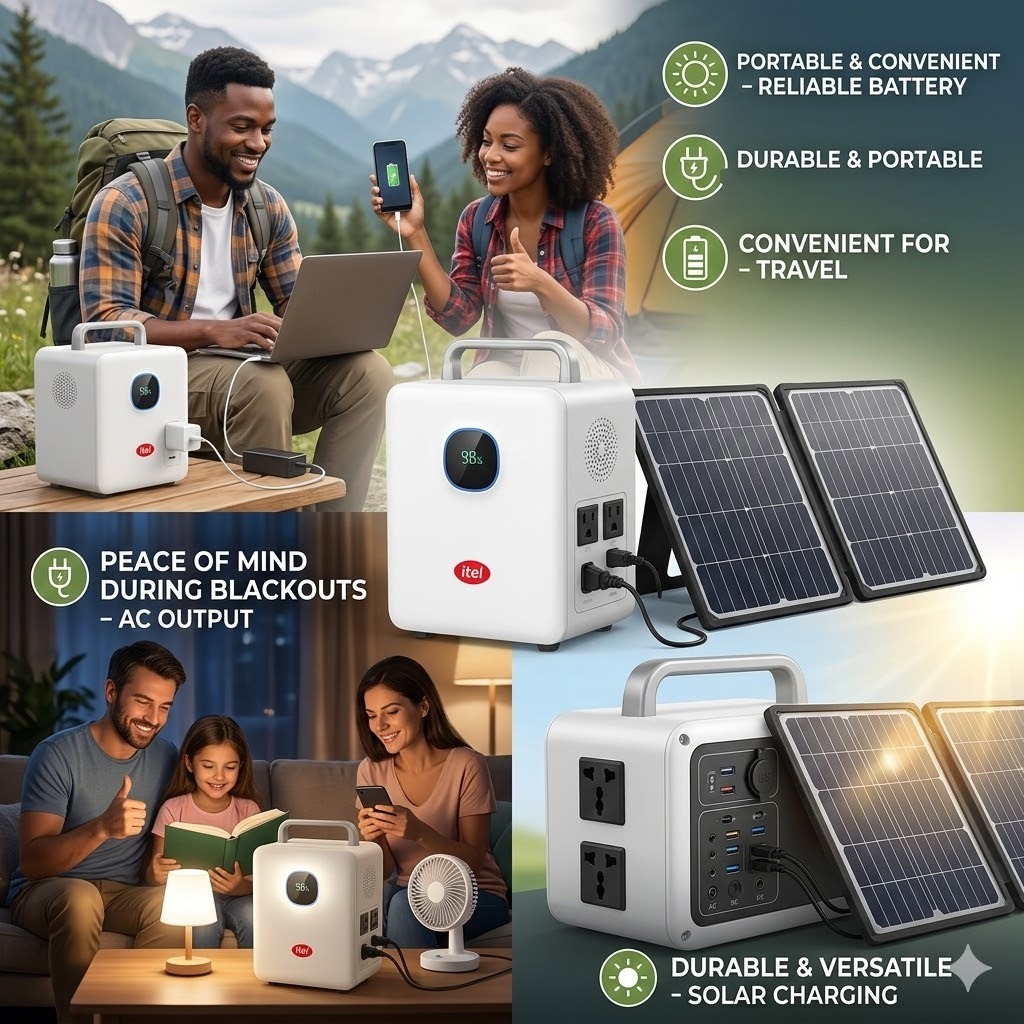
Itel Solar Power Tank User Reviews

How to Get the Most Out of Your Itel Solar Power Tank: Tips &
Maintenance Guide


To maximize battery lifespan, efficiency, and overall performance, follow these practical best
practices:
1. Avoid Frequent Full Discharges
Try not to let the battery drop to 0% regularly. Keeping the battery between moderate charge
levels, when possible, helps extend its overall lifespan.
2. Position External Solar Panels Properly
When charging with solar panels, place the connected external panels in direct sunlight for
optimal energy input. Avoid shaded areas and adjust the panel angle toward the sun for better
efficiency.
3. Pre-Charge Before Important Use
Before trips, events, or expected power outages, fully charge the unit using a wall outlet. This
ensures you have maximum stored energy available when needed.
4. Keep Ports and Vents Clean
Dust can affect performance over time. Keep the AC outlets, charging ports, and ventilation
areas clean and unobstructed for safe and efficient operation.
5. Store in Moderate Temperatures
Avoid exposing the unit to extreme heat or freezing conditions. Store it in a cool, dry place to
protect battery health and internal components.

Itel Solar Maintenance

Itel Solar Power Tank Price in Nigeria (2026)


The Itel Solar Power Tank (1kWh) price in Nigeria varies depending on availability, package
type (with or without solar panels), and market conditions.
For the most accurate and up-to-date pricing, it’s best to buy from an authorized distributor like
Novel Solar.

Considering its 1kWh lithium battery, dual AC outputs, and solar charging capability, the Itel
Solar Power Tank offers strong value as a clean, fuel-free alternative to generators.

Conclusion: Make the Smart Switch to Sustainable Energy Today


The Itel Solar Power Tank is more than just a portable charger it’s a step toward sustainable
living.
With high battery capacity, renewable solar charging, and versatile output options, it provides
dependable power wherever life takes you. Whether you’re preparing for emergencies,
exploring the outdoors, or simply seeking a greener lifestyle, this device delivers convenience
and environmental responsibility in one package.
If you’re ready to upgrade your portable power experience, investing in a renewable energy
product like the Itel Solar Power Tank is a smart move toward a more sustainable future.
Itel Solar Power Tank charging
Order your Itel Solar Power Tank today from Novel Solar and enjoy clean, quiet, and
dependable electricity anytime.

Most-Searched Questions About the Itel Solar Power Tank


1. Does the Itel Solar Power Tank come with solar panels?
No — solar panels are usually sold separately and not included with the unit.
2. How long does it take to charge the Power Tank?
With combined solar and grid charging, it can recharge in about 2 hours.
3. Can the Power Tank run a refrigerator?
It can run small energy-efficient fridges under the inverter’s limit, but large freezers may
exceed capacity.
4. Is installation required?
No — the unit is plug-and-play with no complex wiring needed.
5. Is it suitable for indoor use?
Yes — it operates silently and produces no fumes, making it safe for indoor use.
6. What safety features does it have?
It supports protections like overload and short-circuit safeguards (based on product listings).
7. Does it have USB or DC output ports for smaller devices?
Yes — many listings show USB and DC output options alongside AC sockets.
8. How many charge cycles does the battery last?
The LiFePO₄ battery typically offers 6000+ cycles, or about 8–10 years of use.
CategoriesGeneral topic

Why Cable Sizing is the Secret to a High-Performance Solar System

You’ve invested in premium tier-1 solar panels, a high-efficiency inverter, and a deep-cycle battery bank. You’re ready to flip the switch and enjoy energy independence. But there is one component that often gets overlooked, yet it carries the entire weight of your investment: the cabling.

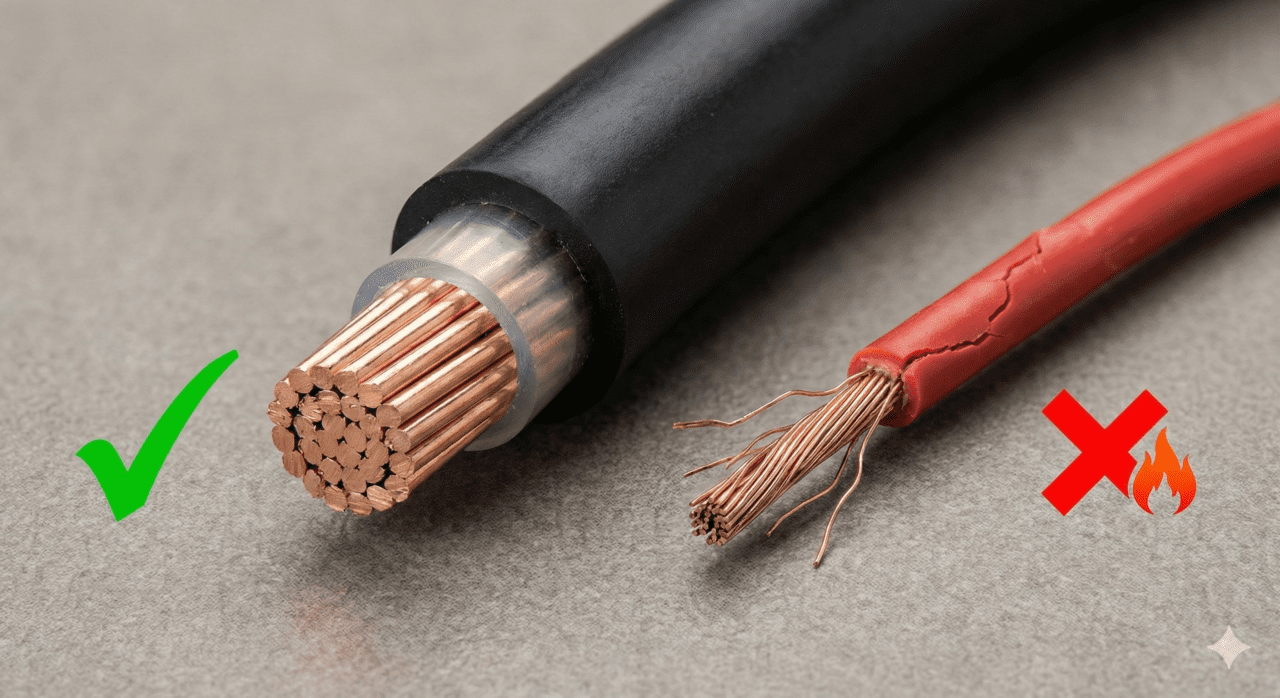
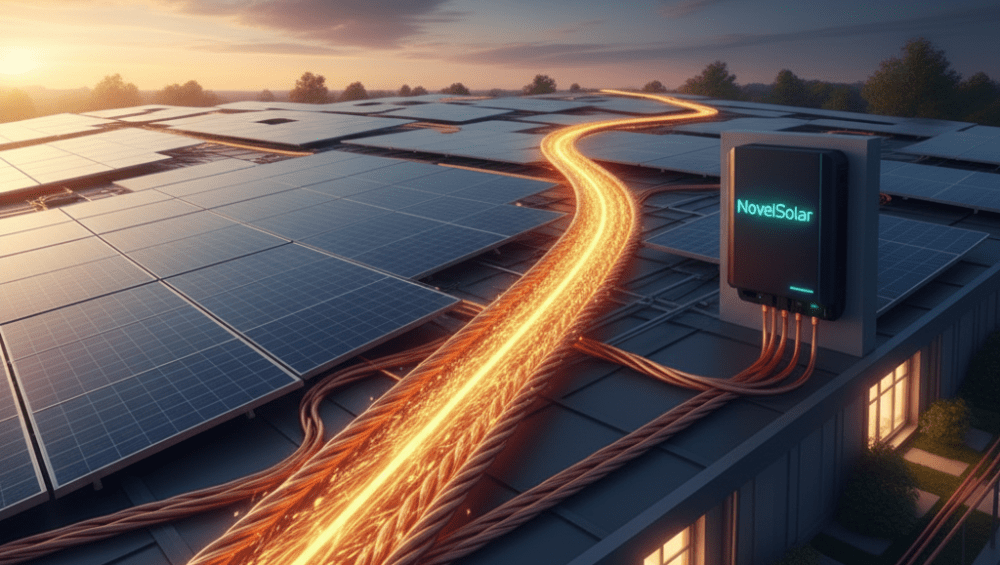
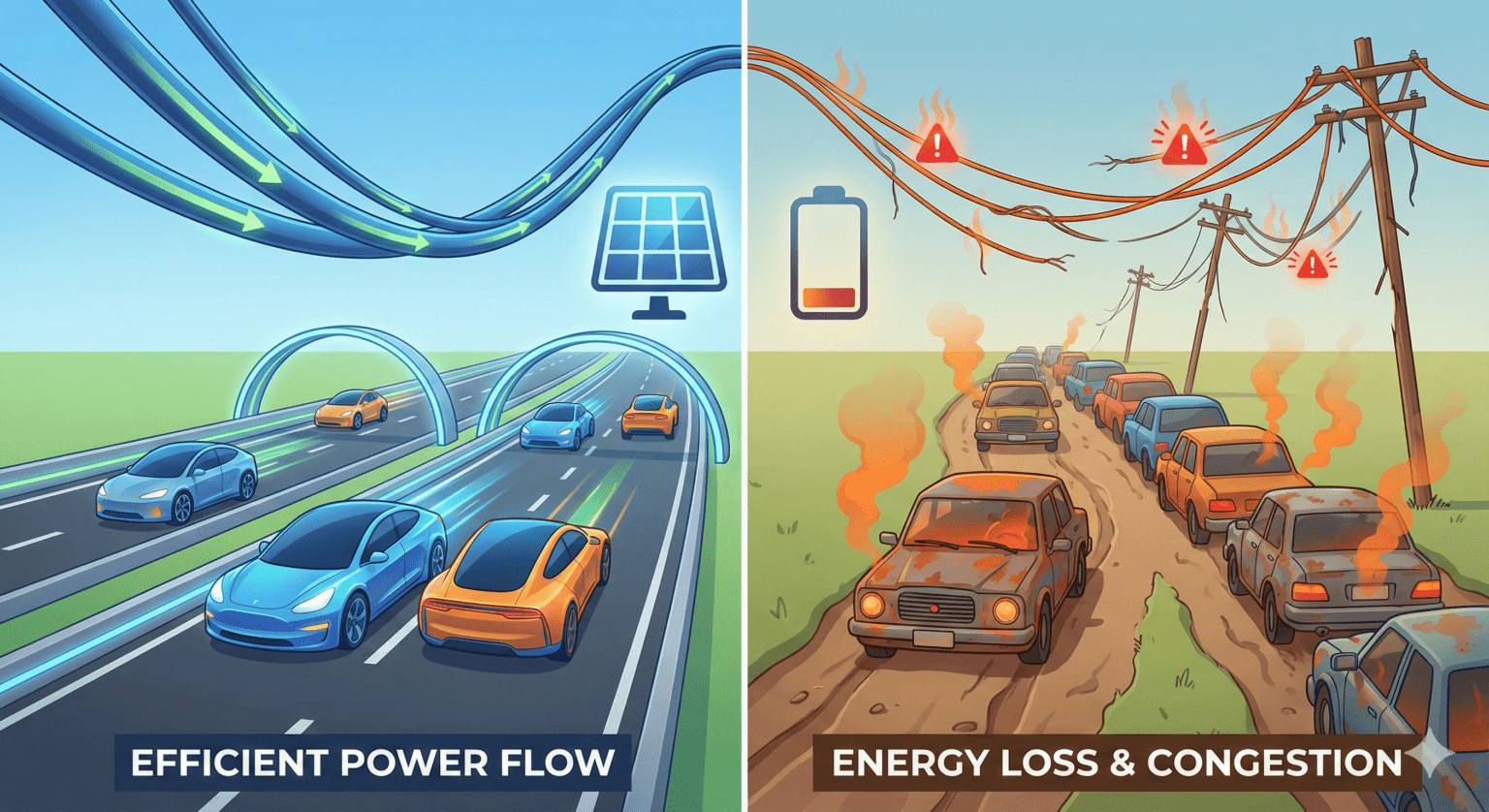
Think of your solar cables as the highways of your energy system. If the highway is too narrow for the traffic, everything slows down, engines overheat, and accidents happen. In a solar setup, the wrong cable doesn’t just lead to underperformance—it can lead to system failure or even fire.

At NovelSolar, we believe a system is only as strong as its weakest link. Here is everything you need to know about choosing the right cables for your installation.

1. The Relationship Between Amps and Thickness

Every cable has a maximum “ampacity”—the amount of current it can safely carry.

  • The Science: As current (Amps) flows through a wire, it meets resistance.

  • The Risk: If a cable is too thin for the current passing through it, that resistance turns into heat. This isn’t just wasted energy; it can melt insulation and create a significant fire hazard.

  • The NovelSolar Rule: We always recommend “upsizing” rather than “undersizing.” It is better to have a cable that is slightly too thick than one that struggles to keep up.

2. Managing “Voltage Drop” Over Distance

In solar installations, distance is the enemy of efficiency. The further electricity has to travel from your panels to your battery or inverter, the more energy is lost along the way. This is known as Voltage Drop.

To keep your system running at peak performance, you must calculate the distance of your cable runs. For longer distances, you need a larger cross-sectional area (thicker wire) to ensure that the power generated on your roof actually makes it to your appliances.

3. Understanding the Three Types of Solar Cables

Not all wires are created equal. A standard household wire isn’t designed to sit on a roof for 20 years.

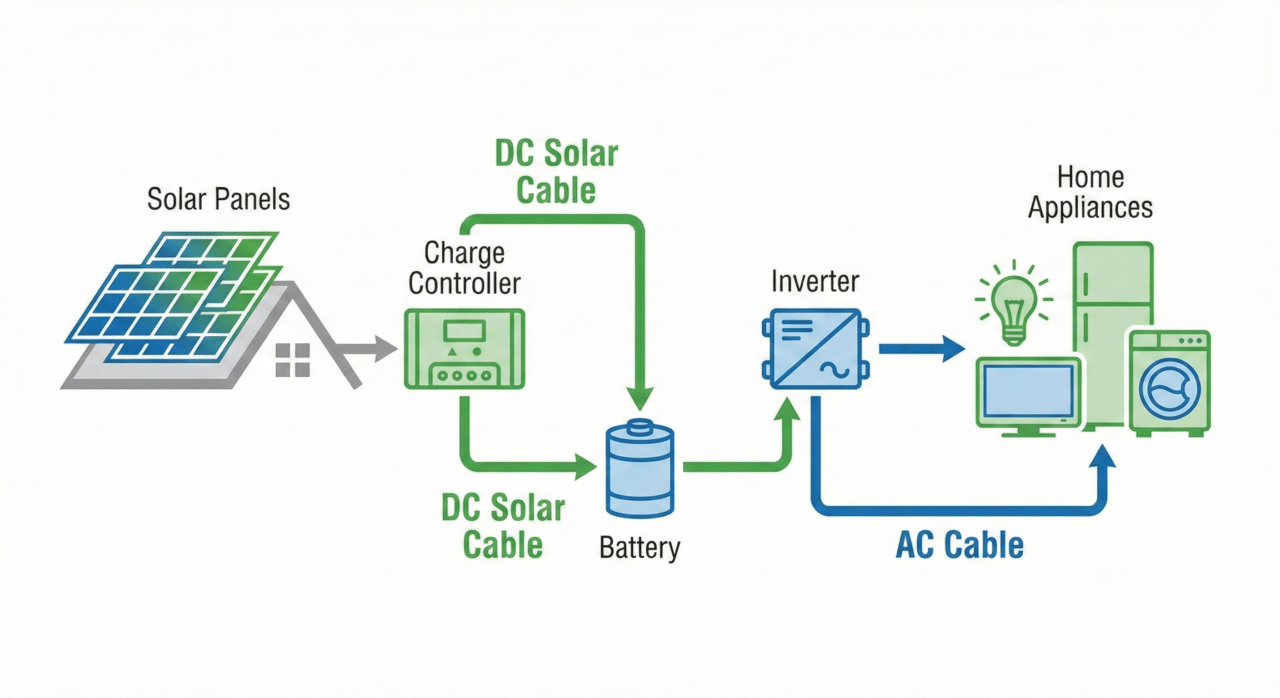
  • PV/Solar DC Cables: These connect your panels to the charge controller or inverter. They are specifically designed to be UV-resistant and weather-proof to withstand the harsh sun and rain.

  • Interconnecting Cables: These are used to link panels together (in series or parallel) or to connect battery modules. Because they handle high-current DC, they must be heavy-duty.

  • AC Cables: These carry power from your inverter to your home’s electrical panel. These are the same type of cables used in standard building wiring, but they still must be rated for the total load of your appliances.

4. Why We Choose Copper Over Aluminum

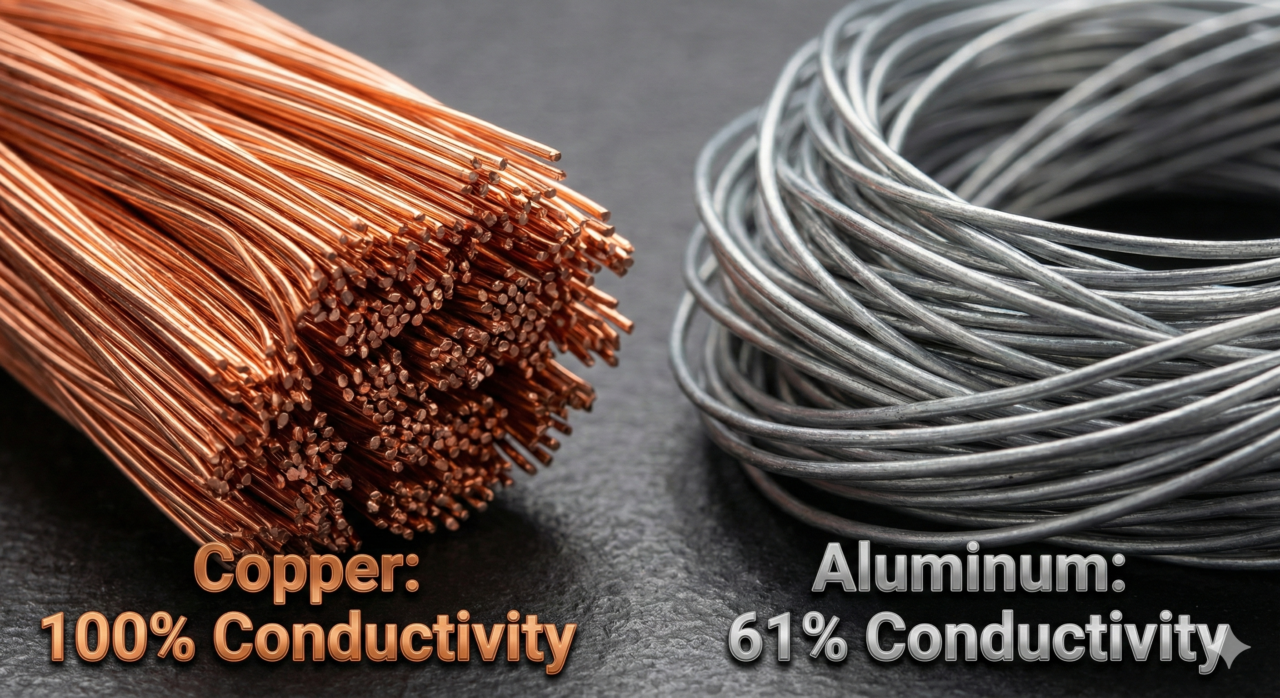
While aluminum is lighter and cheaper, Copper is the gold standard for solar.

  • Conductivity: Copper carries electricity more efficiently than aluminum, meaning less energy is lost as heat.

  • Durability: Solar systems are 25-year investments. Copper is more flexible and less prone to corrosion, ensuring your system stays “healthy” for decades.

5. The “Touch Test” Safety Check

Your cables should never be hot to the touch. If a cable feels warm during peak sunlight hours, your system is “screaming” for help. Heat is a sign of energy being wasted and a system under stress. Proper sizing ensures a cool, quiet, and safe operation.


Optimize Your Investment with NovelSolar

Don’t let your panels sweat for nothing. Choosing the wrong cable to save a few dollars today could cost you thousands in lost efficiency and repairs tomorrow.

At NovelSolar, we don’t just sell components; we design systems. Our experts calculate the exact gauge and type of cabling needed for your specific layout, ensuring your solar system works perfectly from day one.

Ready to power up the right way? [Contact NovelSolar today for a professional consultation.]

Facebook
Twitter
LinkedIn
CategoriesBlog General topic Products

How to Choose the Best Solar Battery Type (Lithium vs Tubular vs Lead-Acid, Explained Simply)

Every solar system needs a battery.

The battery stores energy from the sun so you have power at night or on rainy days.

Choosing the right battery matters a lot.

It affects how long your system lasts, how much you spend, and how smooth your life becomes.

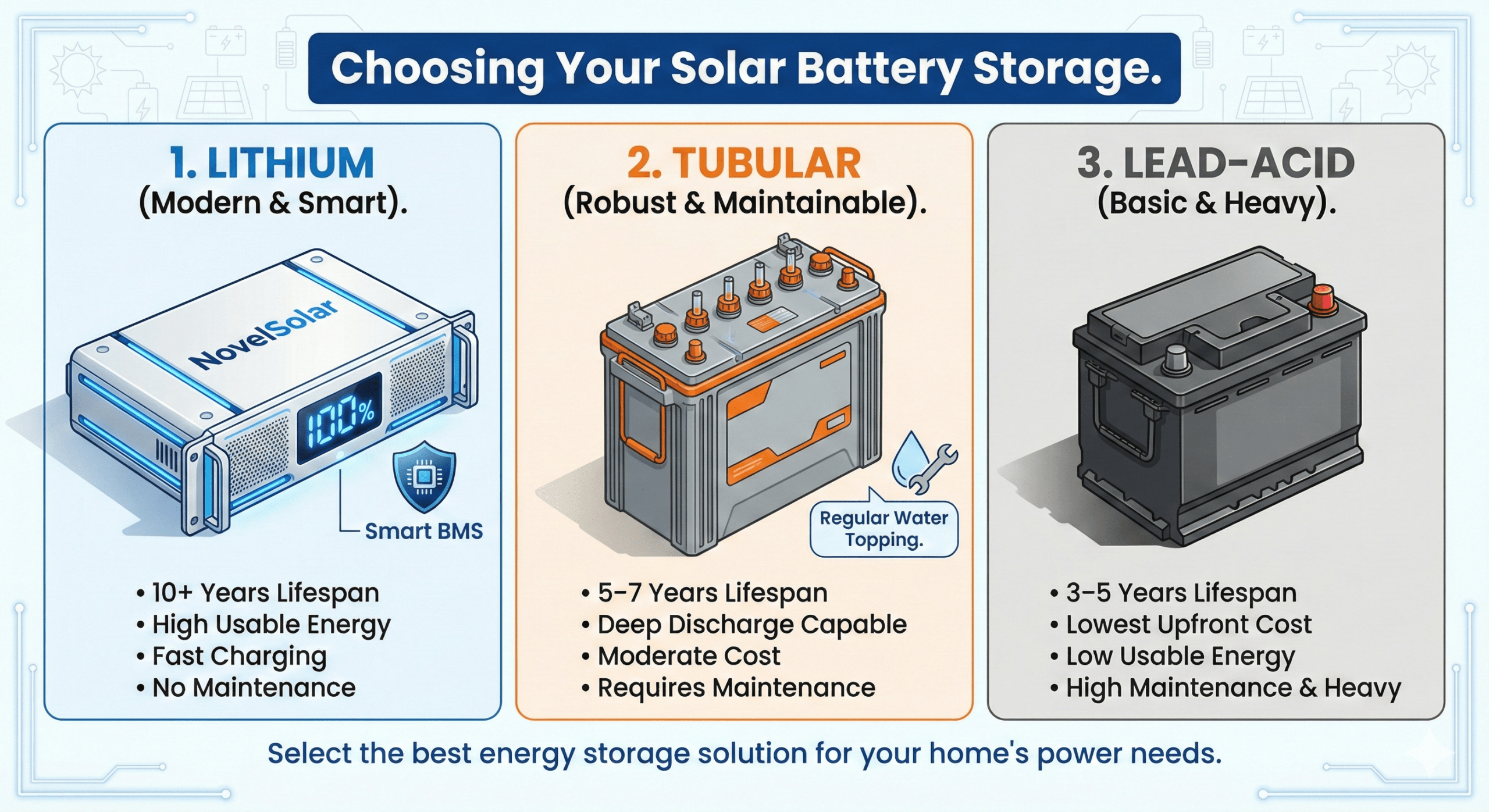
In this blog, we will explain the three main battery types people choose for solar:

  • Lithium batteries
  • Tubular batteries
  • Lead-acid batteries

We will show you what each one is, what it does best, what it does not do well, and how to pick the best one for your situation,  written in simple, clear English for everyone.

What Is a Solar Battery?

A solar battery stores electricity so you can use it later.

When sunshine makes power from your solar panels, the battery holds that energy.

When there is no sunshine,  like at night or in rainy weather,  the battery gives that stored power back to your home.

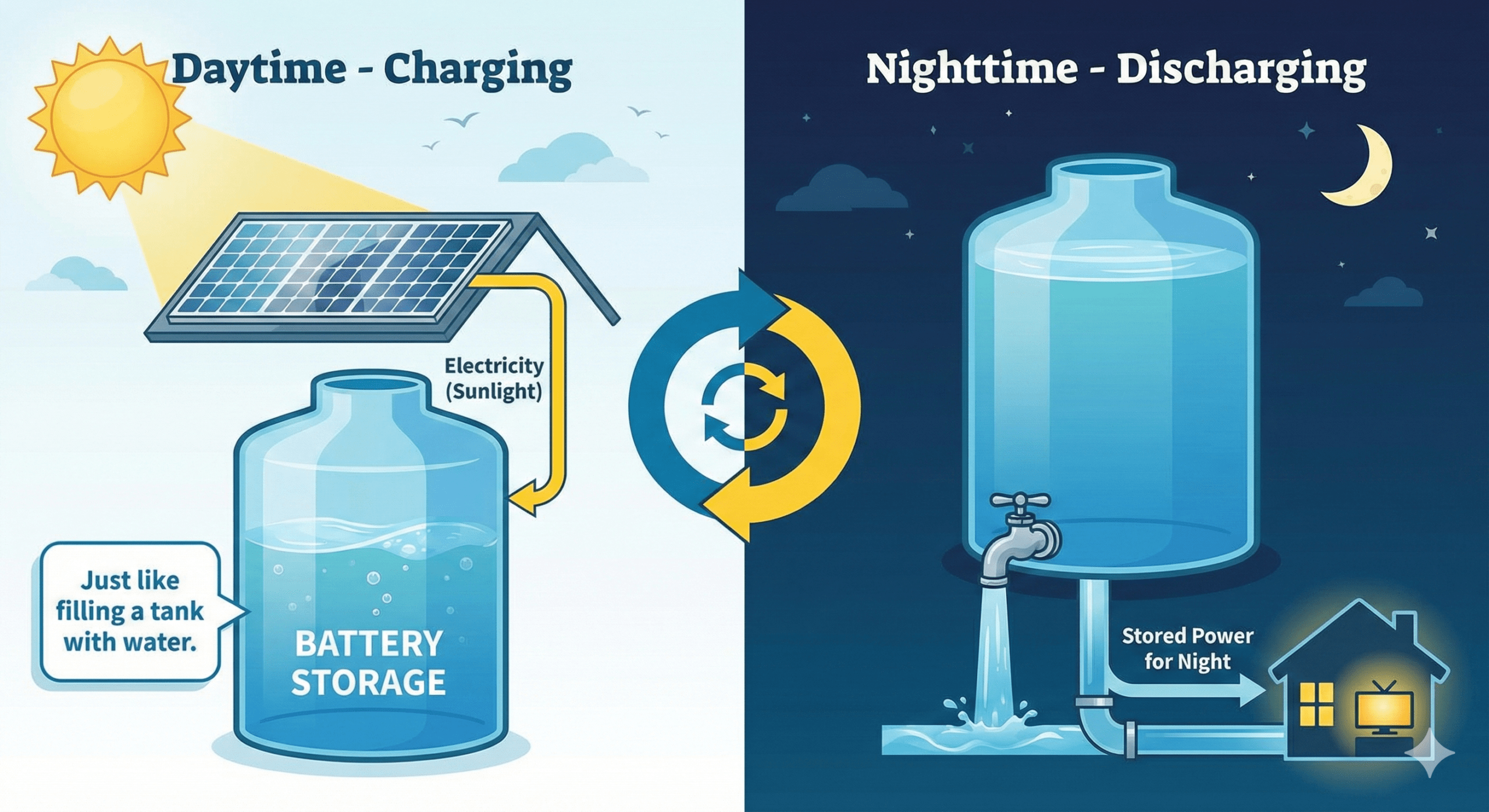
Just like you store water in a tank for night use, a solar battery stores power for night use.

Day-Night, Charging-Discharging Sequence

Battery Type 1: Lithium Battery (Best Modern Choice)

What Is a Lithium Battery?

A lithium battery is a modern battery that uses lithium metal for storing energy.
The most common type used with solar systems is LiFePO4 (Lithium Iron Phosphate).
This type is safe, long-lasting, and stable.

Strong Points of Lithium Batteries

  • Lasts a long time,  10 years or more.


  • Stores a lot of energy in a small space.


  • Charges fast,  you get power quicker from sunshine.


  • Lightweight and compact,  easy to install.


  • Low maintenance,  no topping up water.


  • High usable energy,  you can use most of what is stored without damage.


Lithium batteries also have a smart built-in protection system called BMS (Battery Management System).
This system helps protect the battery from too much charge or discharge, so it lives longer and stays safer.

Drawbacks of Lithium Batteries

  • Cost more upfront,  they are more expensive at first.


  • Some models need inverters that support lithium charging.


  • They are sensitive to very extreme temperatures (very cold or very hot).


Battery Type 2: Tubular Battery (Good for Budget Solar)

What Is a Tubular Battery?

Tubular batteries are a type of lead-acid battery.
They use long tubes of lead plates and acid to store and release power.
These batteries have been used in solar and inverters for many years.

Strong Points of Tubular Batteries

  • Lower upfront cost,  cheaper to buy than lithium.


  • Well-known and established technology,  many technicians in Nigeria know how to work with them.


  • Good for heavy loads and deep discharge,  they can handle strong use.


  • Often last 5–7 years with good care.


Drawbacks of Tubular Batteries

  • Require maintenance,  you may need to add distilled water and check them.


  • Heavier and bigger,  they take more space and weight.


  • Shorter life than lithium,  they wear out sooner.


  • They can lose stored energy if not used properly.


Battery Type 3: Lead-Acid Battery (Older, Basic Option)

What Is a Lead-Acid Battery?

This is the oldest type of rechargeable battery in wide use.
It has been around for more than 100 years and is very common in cars and backup systems.

Strong Points of Lead-Acid Batteries

  • Very low upfront price,  cheapest option.


  • Simple to understand and install.


  • Can handle high surge power (good for starting big loads).


Drawbacks of Lead-Acid Batteries

  • Short lifespan,  they often last only 3 – 5 years.


  • Low usable energy,  you should not drain them too deep or they break faster.


  • Heavy and bulky,  they take much space.


  • Many require regular maintenance like water topping.


Lead-acid batteries are becoming less common for modern solar systems because of these limits.


Compare the Three Battery Types Clearly

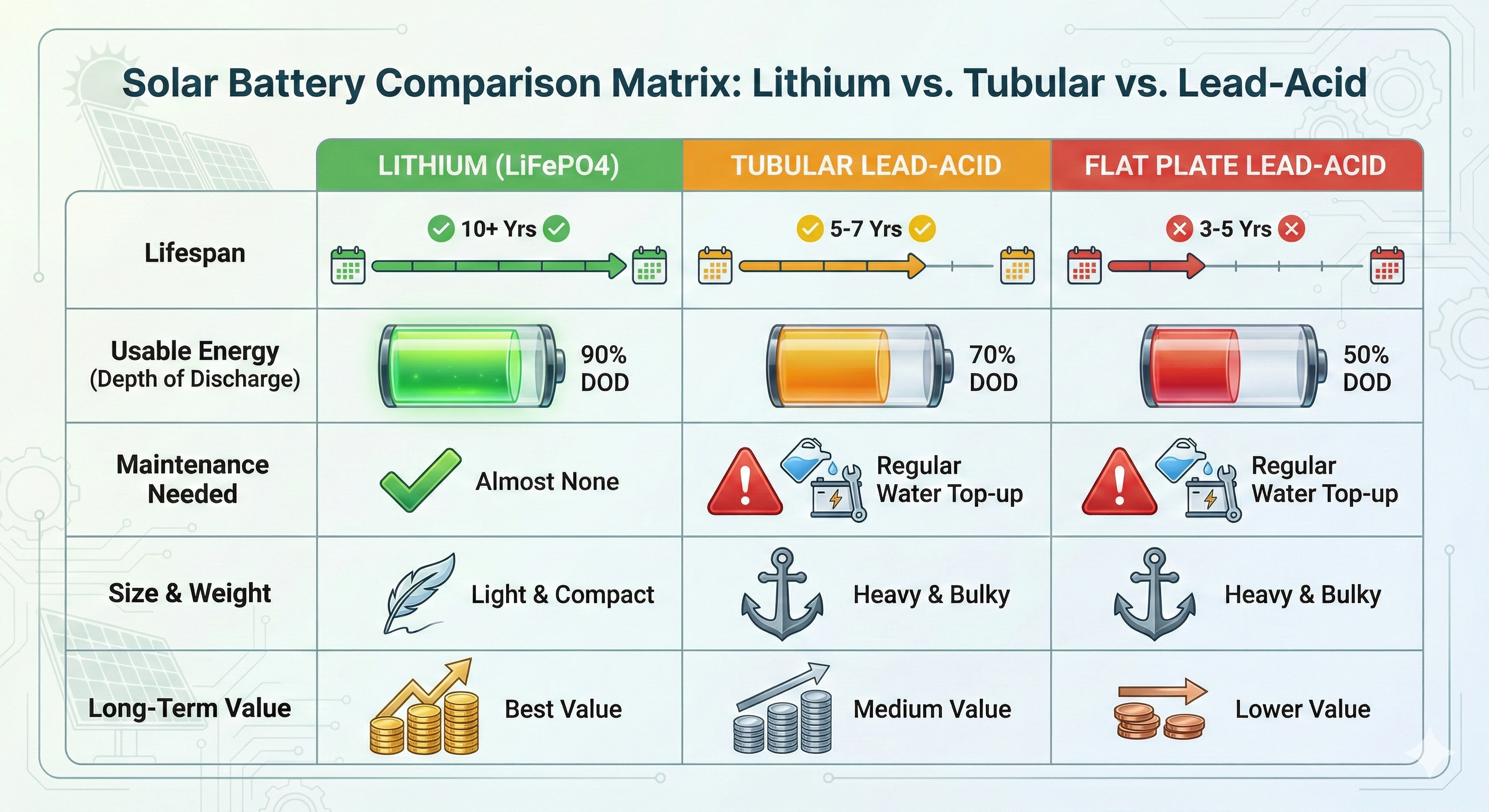
Let us put them side by side in a simple way:

1. Lifespan

Lithium Batteries: Longest (about 10+ years)

Tubular Batteries: Medium (about 5–7 years)

Lead-Acid Batteries: Shortest (about 3–5 years)

2. Depth of Discharge (How much you can use)

Lithium: can use up to 80–90% of stored energy.

Tubular: less than lithium, but good deep cycles.

Lead-Acid: low,  using too much shortens life.

3. Maintenance

Lithium: Almost none

Tubular: Regular (water, cleaning)

Lead-Acid: High (water, checks)

4. Weight & Size

Lithium: Light and small

Tubular: Heavy and large

Lead-Acid: Bulky

5. Cost

Lithium: High upfront but cheaper over time.

Tubular: Medium upfront and medium life.

Lead-Acid: Low upfront but short life.

Why Battery Choice Matters in Nigeria

In Nigeria, power supply can be irregular.
Solar is a way to get reliable light and power.
But if your battery is wrong, you may face:

Short battery life and frequent replacement

Higher long-term cost even if upfront is cheap

Poor performance during long power cuts

More maintenance work

So choosing right helps you save money, time, and stress.

How to Choose the Right Battery for You

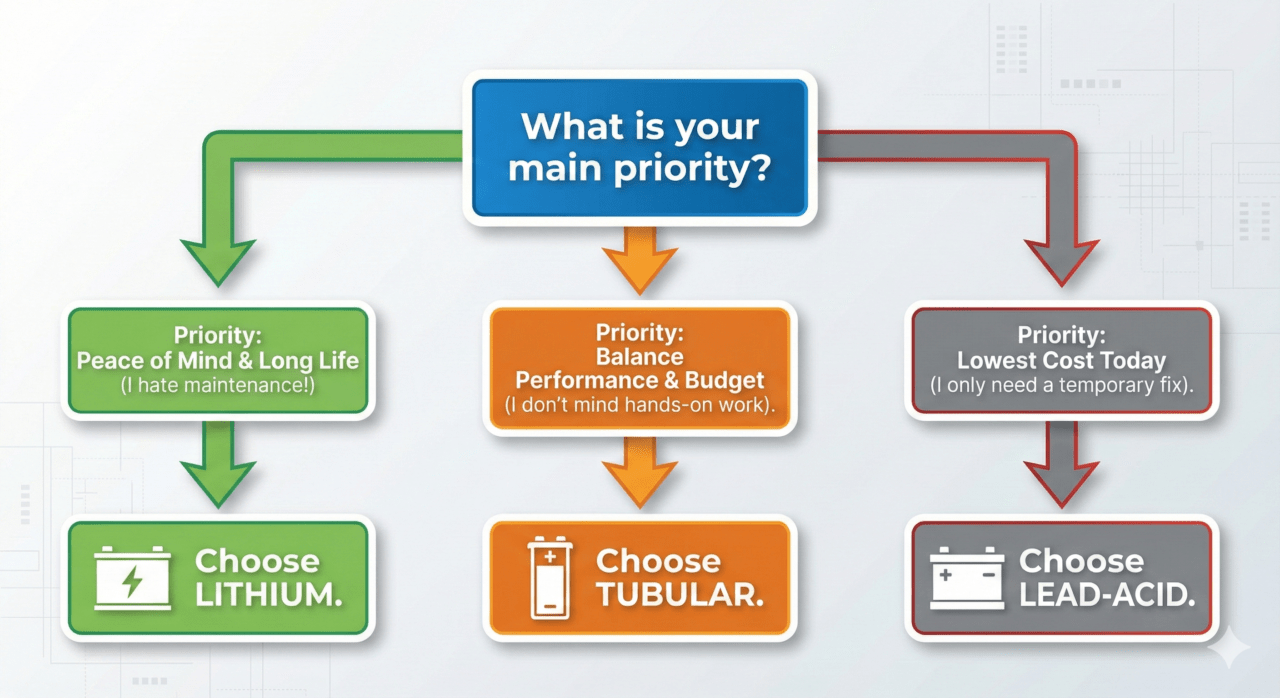
Your choice depends on your daily needs, budget, and expectations.

Choose Lithium if:

You want long life and low maintenance.

You can invest a bit more upfront.

You want fast charging and consistent power.

You are running sensitive or important loads (like fridge, TV, business).

Choose Tubular if:

You want good performance at a decent price.

You don’t mind checking water and maintaining the battery regularly.

You want a battery that can handle heavy use.
Choose Lead-Acid if:

You want the lowest upfront price.

You plan to replace the battery often anyway.

You don’t mind frequent maintenance and shorter life.

Simple Summary Table

FeatureLithiumTubularLead-Acid
LifespanLongMediumShort
Usable EnergyHighMediumLow
MaintenanceVery LowMediumHigh
WeightLightHeavyVery Heavy
Cost (Upfront)HighMediumLow
Best UseLong term & high useBudget but decent
 use
Very low
budget

In Conclusion

Choosing the right solar battery is not just about price.
It is about value, life span, ease of use, and how you want your power system to perform.

  • Lithium is the best choice for long life and little work.
  • Tubular is good for balance between cost and performance.
  • Lead-acid is okay for very low upfront cost people.

Your choice matters for life, comfort, and peace of mind at home or work.

CategoriesGeneral topic

Solar Panels for Homes in Nigeria: A Clear Beginner Guide

If you are reading this, it likely means you want solar panels for home use that actually fit your life in Nigeria. You want power you can plan around, not confusing talk, not “one-size-fits-all,” and not promises that break your trust later. This guide is built from the attached SolarReviews beginner guide, but rewritten for Nigeria, and supported with Nigeria-relevant facts, policies, and data.

Solar panels for home: what they really do

Solar panels produce electricity through the photovoltaic effect. Most home solar panels are made with silicon. When sunlight hits the panel, electrons move and create an electric current. That power is DC electricity, and your household appliances use AC electricity, so a solar inverter converts the DC from your panels into AC you can use at home.

Solar can also produce more energy than you need at a moment. When that happens, the extra energy can either be stored in a battery system for later use or exported to a grid where that option exists and is properly set up.

The 3 home solar system types in Nigeria

Solar systems are commonly grouped into grid-tied, hybrid, and off-grid systems.

Your choice should depend on one key question: Do you need stored power at night and during low-sun periods, or are you only trying to reduce daytime dependence?

1) Grid-tied solar system

A grid-tied system is connected to the grid and typically does not include battery backup. In the SolarReviews guide, it explains grid-tied systems as commonly using net metering and exporting power to the utility grid.

In Nigeria, grid conditions and metering arrangements vary widely, so you should not assume “exporting” will work for you unless your installer can explain, in writing, how your metering and connection will be handled.

2) Hybrid solar system (most common “home comfort” direction)

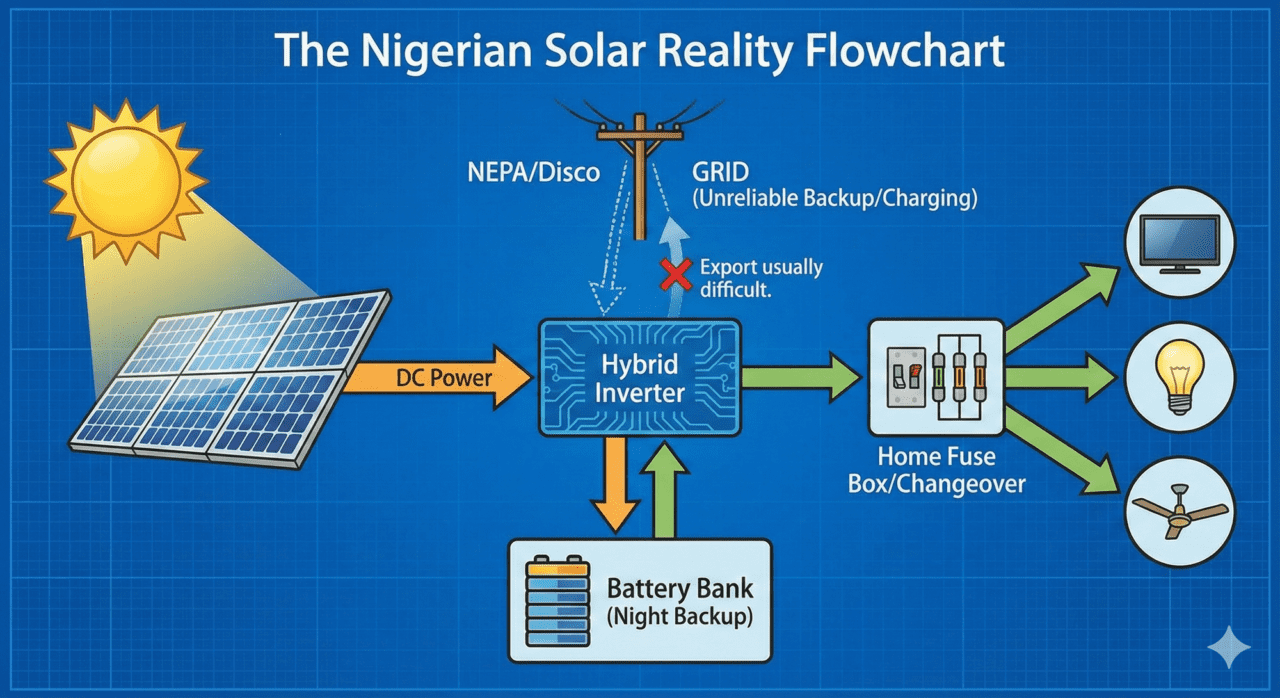
A hybrid system combines solar panels + inverter + battery storage, and can also interact with the grid where needed. This is the practical choice when you want your solar to work beyond daytime, because batteries store excess solar energy for later use.

3) Off-grid solar system

Off-grid means your home runs without relying on the grid. It requires careful sizing and stronger battery planning because your system must carry you through nights and low-sun days. It can work very well, but only when the system is designed around your real loads and lifestyle, not “guesswork sizing.”

A typical hybrid setup in Nigeria prioritizes powering the home and charging batteries first, using the grid only as a backup input when available.

What equipment you must see in a serious quote

A solar setup is not just panels. The attached guide lists the main components that work together to power a home: panels, racking, inverter, a meter, and for hybrid/off-grid systems, battery storage and a charge controller to prevent battery overcharge.

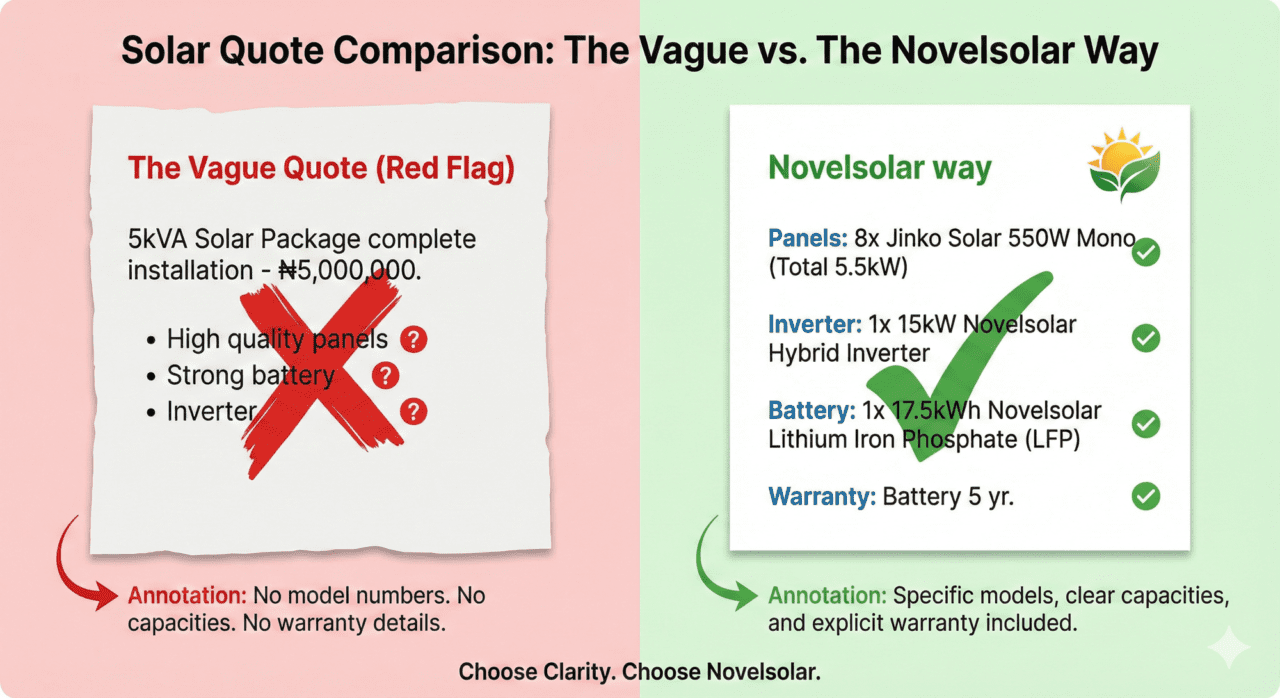
When you are reviewing any installer quote in Nigeria, make sure you see these items clearly stated (with brand/model, not vague names):

  • Solar panels (wattage, quantity)


  • Mounting/racking (roof or ground mounting details)


  • Solar inverter (capacity, type, protections)


  • Battery storage if hybrid/off-grid (capacity in kWh, chemistry type)


  • Charge controller where required (battery protection)


If any quote avoids these details, that is not “simplicity.” That is a risk.

Solar panel types Nigerians usually see (and what matters most)

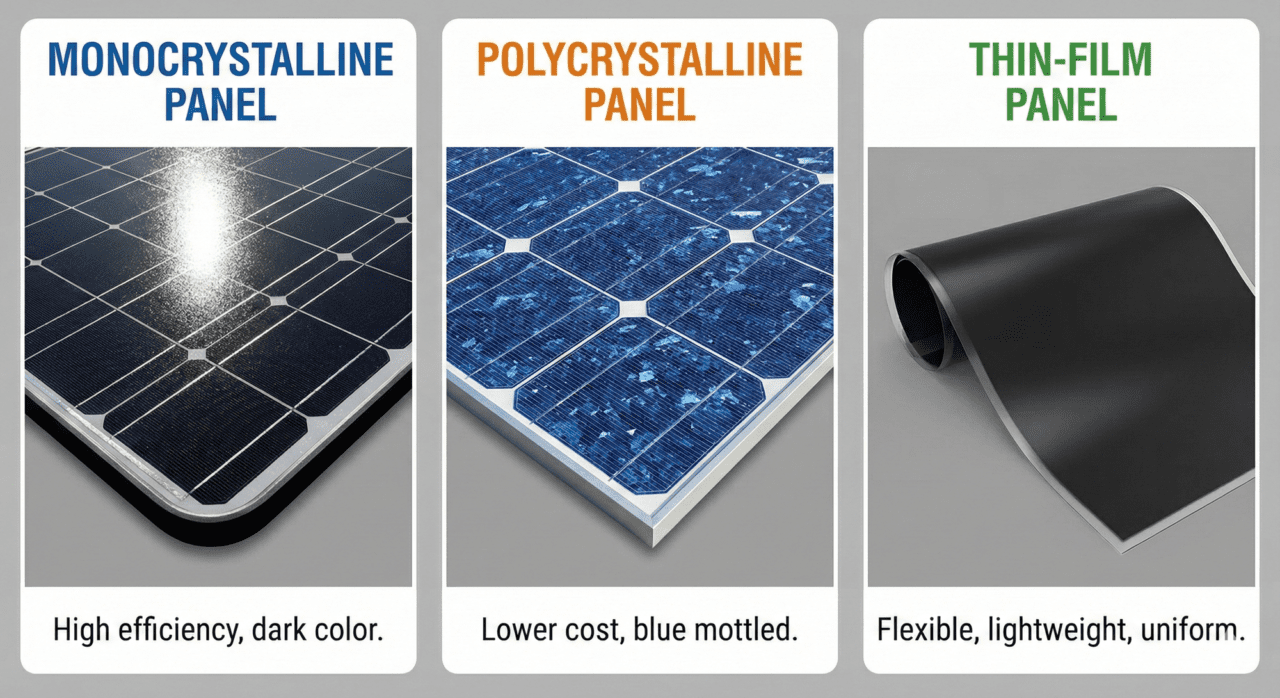
The attached guide states that most residential home solar installations today use monocrystalline solar panels, while polycrystalline and thin-film panels are rarely used for residential projects.

For you, the most important thing is not the label alone. What matters is that you get panels with clear product and performance warranty, proper installation, and protection against common issues like poor wiring, bad mounting, weak earthing, and low-quality connectors.

Monocrystalline leads with the highest efficiency (20%+) and power per square foot; Polycrystalline trails slightly (15-17%) requiring more space for the same output; Thin-Film generally has the lowest efficiency (11-15%) but maintains better performance in high heat or partial shade.

Solar energy in Nigeria: do we have enough sun for solar panels?

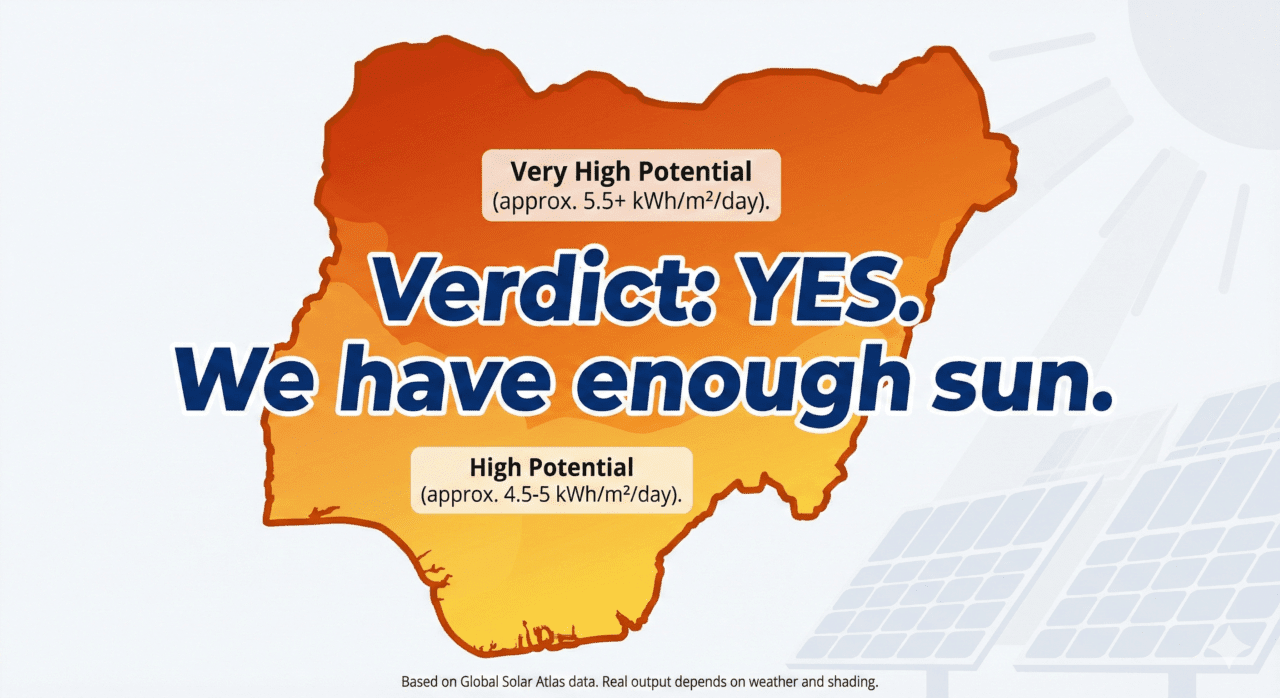
Yes, Nigeria has strong solar potential. The Global Solar Atlas (provided by the World Bank Group as a free solar resource tool) shows high solar irradiation levels across Nigeria, with many locations around roughly ~2000 kWh/m²/year of global horizontal irradiation (GHI), depending on region. This supports why solar can work well across cities, towns, and many campus environments when the system is properly sized.

Local research sources also report daily solar radiation values around the 5 kWh/m²/day range on clear days in measured contexts, which aligns with the idea that Nigeria receives strong sunlight suitable for solar generation.

What you should expect in real life is this: solar output is highest in bright sun, lower in cloudy weather, and affected by shading, roof angle, dust, and heat. Solar works well here, but it still follows physics and weather.

solar map of nigeria

Solar system sizing in Nigeria (the simple way to think about it)

The SolarReviews guide gives a sizing formula you can use to estimate how many panels you need using your energy usage, peak sun hours, and the panel output.

A simple way you can apply this in Nigeria

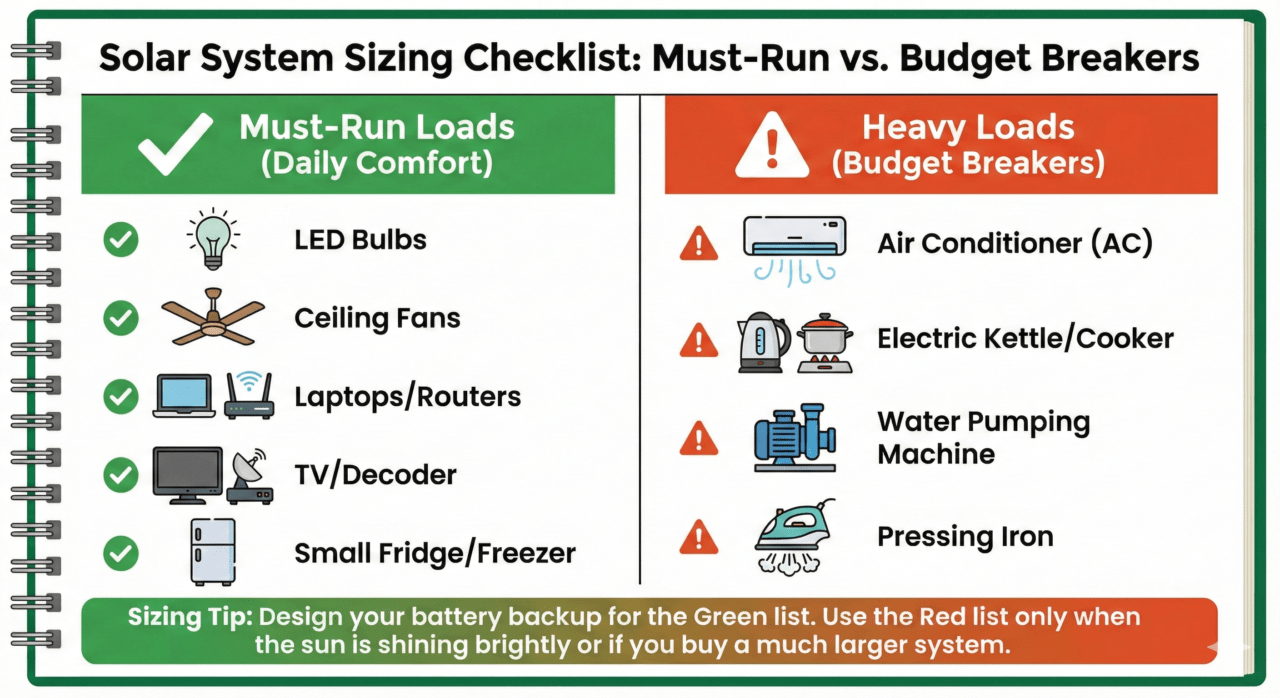
Start from your own lifestyle, not from someone else’s system size. Make two lists:

  1. Your “must-run” loads (things you want daily without stress): lights, fans, Wi-Fi, phone/laptop charging, TV, fridge, etc.
  2. Your “heavy loads” (things that change the budget fast): pumping, electric cooking appliances, multiple fridges/freezers, AC, pressing irons, etc.

Then ask your installer to size your system around energy per day (kWh) and how many hours of backup you want from batteries. If an installer only talks about “number of panels” without discussing your daily energy and backup goals, you are not getting a real design.


Solar battery storage: what to expect and what not to expect

Battery storage is what turns solar into something you can rely on at night. The attached guide describes battery storage as a way to store excess solar energy production for later use, and notes batteries are used in hybrid and off-grid systems.

Here is the honest part: battery backup time depends on your battery size (kWh) and your total running load (watts) at that time. If your night load is small (lights, fans, charging), batteries last much longer. If your night load is heavy (freezers + pumping + AC), batteries drain fast unless the bank is large.

Solar panel cost Nigeria: what verified local sources say (and how to use it safely)

Nigeria prices move due to exchange rates, import costs, and component quality. That is why you should treat any online price as a range, not a promise, and always confirm with current quotes.

That said, Nigerian solar industry sources commonly publish market ranges. For example, Solarlify’s Nigeria market estimates (late 2025) provide typical price ranges by system size (kW) for residential solar setups. Another Nigeria-based solar education source also gives a broad estimate that typical residential systems can range into the millions of naira depending on size and component quality.

How to use this properly (so you don’t get misled): use published ranges only as a starting point, then compare 3+ quotes with the same checklist: panel wattage and count, inverter capacity, battery kWh, protections, wiring quality, and warranty. Even the SolarReviews guide recommends comparing quotes carefully across system details and warranties; that approach matters even more in Nigeria.


Nigeria reality check: why more people are moving to solar now

Nigeria’s energy access challenges are still significant. World Bank data shows Nigeria’s electricity access was about 61.2% in 2023, meaning tens of millions of people still lack reliable access. At the same time, Nigeria’s regulators and institutions are actively working around mini-grids and distributed energy. NERC’s Mini-Grid Regulations (2023) are part of the framework guiding mini-grid development. The Rural Electrification Agency (REA) also runs programs aimed at scaling solar home systems and access for households and MSMEs.

Even in mainstream news, Nigeria continues to attract financing and partnerships around renewable mini-grids to expand access.

This matters to you because it signals one thing: solar adoption is not a fantasy trend; it is a growing practical solution, and it is being supported by policy and programs, even though household pricing still depends on your local installer and component quality.


What you should check before you pay any installer

Ask for these numbers in writing

  • Total system size (kW) and what it is designed to power
  • Battery size (kWh) and expected backup hours for your listed appliances
  • Inverter capacity and whether it can handle starting surges (especially for fridges, pumps, and AC)
  • Protection devices (breakers, surge protection, isolators) and proper earthing
  • Warranties (panel warranty, inverter warranty, battery warranty, and workmanship warranty)

Watch out for these common traps

  • A quote that lists “inverter + battery + panels” with no models and no capacity numbers
  • A promise that a small system will carry heavy loads without explaining battery size and load limits
  • A design that ignores your roof shade, roof strength, cable distance, and safety protections


Practical next steps (what you can do today)

If you want solar panels for home use and you want to avoid regret, do these three steps in this exact order:

  1. Write your appliance list and how many hours you use each per day (even rough numbers help).
  2. Decide your priority: “daytime savings” or “night backup comfort,” because that changes battery planning completely.
  3. Collect at least three quotes and compare them using the checklist above, not by price alone.
checklist

Calm close: what this means for you

You don’t need to be an engineer to make a smart solar decision in Nigeria. You only need clear numbers, honest limits, and a system designed around your real home life. Solar works here because we have strong sunlight, but the result you get depends on sizing, component quality, installation safety, and how well the system matches your daily habits.

If you want, send me your appliance list (even in plain text like “2 fans, 1 fridge, TV, lights, laptop”), and I will turn it into a simple solar sizing guide (recommended inverter range + battery kWh range + panel kW range) without guessing or overpromising.